Student Loans & PSLF
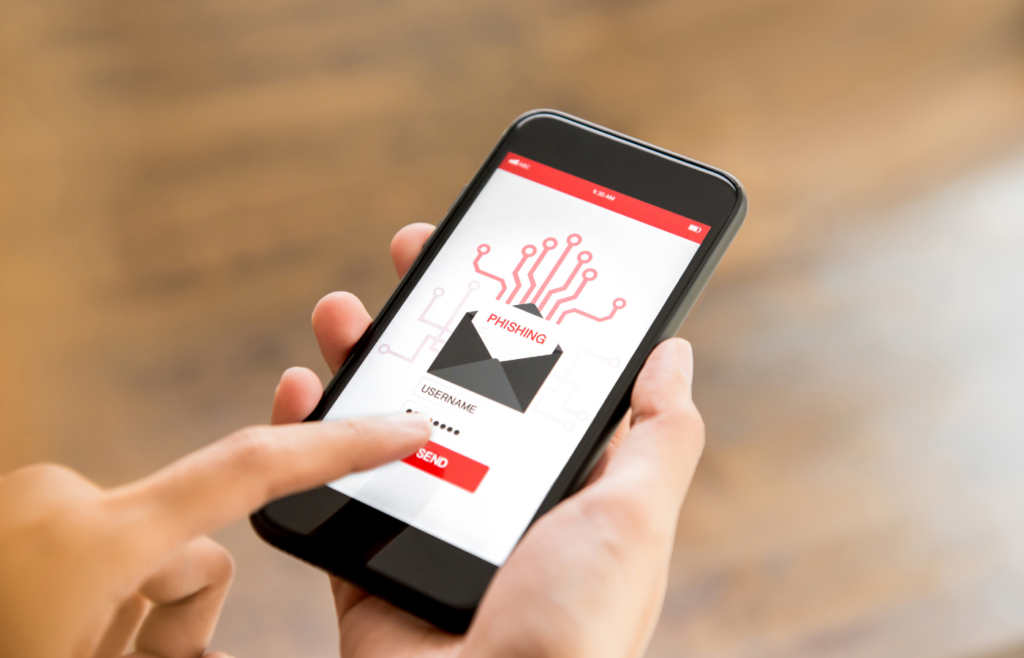
A message lands. It says your student loans qualify for forgiveness, or that your account needs attention, or that a program is closing and you have to act now. You don’t know whether it came from the Education Department, from your servicer, or from someone who bought your name off a list. Here’s the fastest thing you can check, and it comes from the Department itself: its official loan servicers use websites and email addresses ending in .gov.
That single rule resolves most messages in a few seconds. The rest of this post is what to do when it doesn’t, why student loan forgiveness scams are harder to spot this year than they used to be, and what the Department says about paying anyone for federal student loan work.
How can you tell if a student loan forgiveness message is real?
Federal Student Aid publishes the rule plainly on its scam-avoidance page: “our official loan servicers use websites and email addresses ending in .gov”. Look at the sender, not the message.
The Department is more specific than that about its own outbound mail. On the same page it states, “Emails from us will only come from these addresses:”
- noreply@studentaid.gov
- noreply@debtrelief.studentaid.gov
- ed.gov@public.govdelivery.com
And for texts: “Text messages from us will only come from 227722 or 51592.”
The Federal Trade Commission publishes the same three email addresses in its own consumer alert, which says legitimate Department emails “will only come from one of these three email addresses.” Two federal agencies publishing an identical sender list is about as firm as this kind of fact gets. The FTC adds a detail: scammers build addresses that look right at a glance, “say, by using the number ‘0’ instead of the letter ‘O’,” so read the address character by character rather than recognizing its shape.
One more sentence does more work than any red-flag list, and it’s the Department’s own: “We and our partners will never ask for your password. That’s a guarantee.” The same page states that the Department and its partners will never ask for your StudentAid.gov username and password. There’s no exception to hunt for. Anyone asking has told you what they are.
If you’re still unsure, the FTC points to a phone number: the Federal Student Aid Information Center at 1-800-433-3243, which can confirm whether a message came from the Department.
Who are the Education Department’s official student loan servicers?
Servicers are the other half of the check. The Education Department currently lists seven companies as servicing the federal student loans it owns. These are the seven, with the contact address the Department publishes for each, from its “Who’s My Student Loan Servicer?” page, captured August 27, 2026:
| Loan servicer | Official web address |
|---|---|
| Aidvantage | aidvantage.StudentAid.gov |
| CRI | cri.StudentAid.gov |
| Default Resolution Group | studentaid.gov/default-support/ |
| ECSI | efpls.ed.gov |
| Edfinancial | edfinancial.StudentAid.gov |
| MOHELA | mohela.StudentAid.gov |
| Nelnet | nelnet.StudentAid.gov |
If a message about your federal loans points somewhere that isn’t on that list and doesn’t end in .gov, that’s your answer without reading another word of it.
Why real student loan notices look like scams in 2026
The standard advice is to be suspicious of anything alarming and unexpected. That advice assumes the real notices are calm and expected. In 2026 they haven’t been, and a borrower who can’t tell the difference isn’t being careless.
The Department really does send letters saying loans are eligible to be forgiven. In the week of August 14, 2026, it emailed a batch of borrowers to tell them they’d reached the payments required for forgiveness under an income-driven plan. Borrowers call these IDR forgiveness “golden letters”, and they read exactly like the thing you’ve been warned about.
Servicers really do send 90-day deadline notices demanding an application. Borrowers sitting in a SAVE forbearance have been receiving a SAVE forbearance notice giving them 90 days to choose a new repayment plan, with a real consequence for missing it. Urgency plus a deadline plus a form to submit is the shape of a scam, and here it’s the shape of a legitimate notice.
A servicer really did send delinquency warnings that were wrong. Over the August 1 weekend in 2026, MOHELA-serviced borrowers saw past-due balances appear on MOHELA-serviced accounts that had shown $0 due under an active forbearance, with default warnings and delinquency alerts arriving by email. The Department later confirmed the error to Business Insider. For several days, the fake-looking message was the real one.
Payment counts really did move backward. Borrowers watched PSLF payment counts drop, and the Department has since acknowledged that at least part of that reversal was deliberate rather than a display error.
And then there’s the Department’s own paperwork. Its scam-avoidance page and its servicer page both list the seven servicers, and they publish different contact addresses for one of them: the scam-avoidance page gives Default Resolution Group as myeddebt.ed.gov, while the servicer page gives studentaid.gov/default-support/. Both pages were live and reachable on August 27, 2026. The scam-avoidance page also anchors its sense of scale to a 2023 Federal Trade Commission figure and mentions none of the 2026 program changes.
That last item is the whole problem in miniature. The guidance telling you how to verify a sender is itself carrying an address that another page from the same agency contradicts. So the usual instruction to trust your gut doesn’t hold up. A checkable sender rule does.
How common are student loan forgiveness scams?
Nobody publishes a student-loan-specific trend line, so the only answer available is a category-level one. The Federal Trade Commission reports that government impersonation losses rose to about $920 million in 2025, up from about $789 million in 2024.
The FTC’s 2025 imposter-scam data release, issued June 15, 2026, breaks out neither student loans, debt relief, nor credit repair as a category. What it does report is the wider picture that student loan forgiveness impersonation sits inside.
Reported losses to imposter scams overall reached $3.5 billion, which the FTC describes as increasing nearly three times since 2020. Nearly one in three fraud reports last year were about imposter scams. Across all fraud types, about $16 billion was reported lost in 2025, which the FTC calls the highest on record and an increase of about 25% over 2024.
Those are category-level numbers covering government impersonation and total fraud. None of them is a student loan figure.
What the Education Department says about paying for student loan help
Plenty of federal loan work genuinely is free, and the Department is direct about it. A loan servicer, in its words, is a company it assigns “to handle the billing and other services on your federal student loan on our behalf, at no cost to you.” Servicers collect payments, answer questions about your loans, walk through repayment options, and switch you to a new plan at no cost. Income-driven repayment applications and consolidation applications can both be submitted at StudentAid.gov directly, and our complete guide to federal student loan forgiveness covers what’s available.
Its scam page also notes that “getting assistance from a private, unaffiliated debt relief company doesn’t necessarily mean you’ll be scammed,” while “seeking out unverified services is a common path to a student loan forgiveness scam.”
Then it gets blunt. The servicer page says: “If you are contacted by a company asking you to pay ‘enrollment,’ ‘subscription,’ or ‘maintenance’ fees to enroll you in a federal repayment plan or forgiveness program, you should walk away.” The same page adds, “Never pay an outside company for help with your federal student loans. Your loan servicer will help you for FREE.” That’s a good rule and you should apply it.
The enforcement record shows what the Department is warning about. In April 2026, the FTC obtained a temporary restraining order against an alleged student loan debt relief scheme, alleging that the operators cold-called consumers, pretended to be affiliated with the Education Department or borrowers’ actual servicers, and used false forgiveness claims to draw people into paying “illegal upfront monthly fees as high as $1,400.” The complaint alleges the operation collected at least $8.8 million. Those are allegations; the FTC notes the case will be decided by the court.
A separate matter reached its end in July 2026, when an operator of a student loan forgiveness scheme agreed to a proposed order permanently banning her from debt relief and telemarketing, resolving FTC charges that she and other operators took more than $45.9 million from consumers. The FTC had sued in November 2024, alleging the operation pretended to be affiliated with the Education Department and falsely promised forgiveness. The monetary judgment of more than $45.9 million is partially suspended because of an inability to pay, and becomes due in full if she’s found to have materially misrepresented her finances.
Both matters turn on the same conduct: someone claiming to be the Department, or claiming to speak for it.
Where Finnita sits against the Education Department’s test
Finnita is a specialist student loan enrollment service that focuses exclusively on federal repayment and forgiveness programs. Applying the Department’s test to us, plainly: Finnita is offered through an employer, and the borrower comes to us. Finnita is also a service borrowers pay for. Employers pay nothing; the fee is the borrower’s.
Whether it makes sense to pay anyone to do this work is argued in full elsewhere, in why people pay for a service they could do themselves and the case for a student loan specialist.
Only 11% of borrowers who try on their own succeed. The Finnita figures that follow are service-wide aggregates across all customers and all programs, not projections for any individual. 98% of Finnita customers are successfully enrolled. Finnita customers save an average of $468/month across all enrollees. 100% refund if we can’t enroll you.
Borrowers can see their projected savings in about 60 seconds.
What to do if you think you’ve been scammed by a student loan company
The Department publishes its own steps, and they’re worth following in order.
Contact your federal loan servicer first, both to confirm no unwanted actions were taken on your loans and to revoke any authorization agreement the servicer has on file for you. That second part is easy to overlook: an authorization can keep working long after you’ve stopped dealing with the company.
Contact your bank or credit card company to stop payments to the company.
Then file. The Department accepts complaints directly, and it points borrowers to both the FTC and the Consumer Financial Protection Bureau. The FTC takes reports at ReportFraud.ftc.gov.
If your StudentAid.gov account itself is involved, or you shared your username and password with someone you now suspect, log in and change your password immediately. Check your contact email, mailing address, and phone number on the account, since those are what a scammer would change to intercept what comes next. Then file a complaint so the Department can monitor the account for continued suspicious activity.
None of this depends on being certain. If you’re unsure whether a message was real, calling the Federal Student Aid Information Center at 1-800-433-3243 costs you a few minutes. Acting on a fake one can cost considerably more.
Frequently asked questions
What email address does the Department of Education send from?
Federal Student Aid states that its emails come only from noreply@studentaid.gov, noreply@debtrelief.studentaid.gov, or ed.gov@public.govdelivery.com. The FTC publishes the same three addresses in its own consumer alert. Look closely at the address itself, since a scammer may substitute similar-looking characters, such as a zero for a capital O.
Does the Department of Education send text messages about student loans?
Yes. Federal Student Aid states that its text messages come only from the shortcodes 227722 or 51592. A text about your federal student loans from a regular ten-digit phone number didn’t come from the Department.
I got an email saying my loans will be forgiven. Is it real?
It might be, and the way to tell is the sender rather than the content. The Department has emailed borrowers to tell them they’ve reached the payment count required for forgiveness under an income-driven plan, and those notices are genuine. Check the sender address against the Department’s published list, and remember that such a notice reports eligibility, not forgiveness already granted.
Will my loan servicer ever ask for my StudentAid.gov password?
No. The Department states that it and its partners, including loan servicers, will never ask for your StudentAid.gov username and password. Its own page puts it as an absolute: “We and our partners will never ask for your password. That’s a guarantee.” Any request for those credentials is a scam signal on its own.
Do I have to pay a company to enroll in a forgiveness program?
No. The Department states that you don’t have to pay to receive assistance with services such as consolidating federal loans or applying for an income-driven repayment plan, and that if a company contacts you asking for enrollment, subscription, or maintenance fees to enroll you in a federal program, you should walk away. Your servicer performs those services at no cost.
What do I do if I gave a scammer my StudentAid.gov login?
Log in and change your password right away, then check that the contact email, address, and phone number on the account are still yours. Contact your loan servicer to confirm nothing was changed on your loans and to revoke any authorization agreement on file. Then file a complaint with the Department so it can monitor the account, and report it to the FTC at ReportFraud.ftc.gov.
Does the Education Department call borrowers about student loans?
Federal Student Aid’s scam guidance says scams arrive “from phone calls and emails to text messages,” and it publishes specific rules for two of those three: the three email addresses its mail comes from, and the two shortcodes its texts come from. It publishes no equivalent list for incoming phone numbers, and its advice on unofficial addresses and phone numbers points you back to checking the sender’s email address. So a call can’t be verified the way an email or text can. In April 2026 the FTC alleged that the operators of a student loan debt relief scheme cold-called consumers and pretended to be affiliated with the Education Department or with borrowers’ actual servicers. If you took a call about your federal loans and you’re unsure, hang up and call the Federal Student Aid Information Center at 1-800-433-3243 to confirm whether the contact came from the Department.
More from the Finnita blog

Student Loans & PSLF
Federal Student Loan Update: September 2026 — What Changed and What It Means for Borrowers
Read more
Student Loans & PSLF
Nurses and Hospital Staff on SAVE: Your Plan Choice and PSLF
Read more
Student Loans & PSLF
Teachers on SAVE: What to Do Before Your 90 Days Run Out
Read moreSee what you could save
It takes 60 seconds to find out how much you could save on your student loans. No commitment, no credit check.
Check Your SavingsBring Finnita to your organization
A meaningful employee benefit that costs you nothing. No budget approval, no procurement, no administrative burden.
Bring Finnita to Your Organization