
Government

By The Finnita Team
Government workers and first responders asking how PSLF works for them — federal civilian employees, state and local agency staff, police officers, firefighters, paramedics, and 911 dispatchers — sit inside the broadest PSLF-eligible population in the country. Public Service Loan Forgiveness can erase the entire remaining federal Direct Loan balance for any full-time W-2 employee at a federal, state, county, municipal, or tribal government agency, or at a 501(c)(3) nonprofit, after 120 qualifying monthly payments. The forgiven amount is federally tax-free, and the program is structurally generous. It is also frequently misapplied. The public-sector failure modes turn on employer-verification edge cases: federal-versus-contractor confusion, municipal DBA versus legal-entity mismatches on the W-2, shift-differential or hazard pay miscategorized in income-driven recertification, and what the July 2026 PSLF Employer Rule and Boston-led lawsuit mean. This piece covers PSLF for government workers and first responders specifically; our parent piece on student loan forgiveness for government and public service workers covers the broader sector.
Who qualifies: federal, state, local, and first responders
Federal Student Aid’s qualifying-employer definition turns on the employer’s tax status, not the employee’s job title or rank. For government workers and first responders, the practical landscape sorts into four categories.
Federal employees. Every full-time W-2 employee at an executive branch agency, independent agency, or federal commission qualifies, whether career civil servant, political appointee, or career-conditional appointee. The U.S. Public Health Service, Department of Veterans Affairs, Indian Health Service, Department of Defense, and other federal civilian employers all qualify. Federal contract employees do not; the W-2 is the legal employer, not the agency.
State employees. State agencies, state-funded universities and community colleges, state-run hospitals and health departments, and state judicial and legislative employees all qualify. Public defenders and prosecutors qualify as state or county employees depending on the W-2.
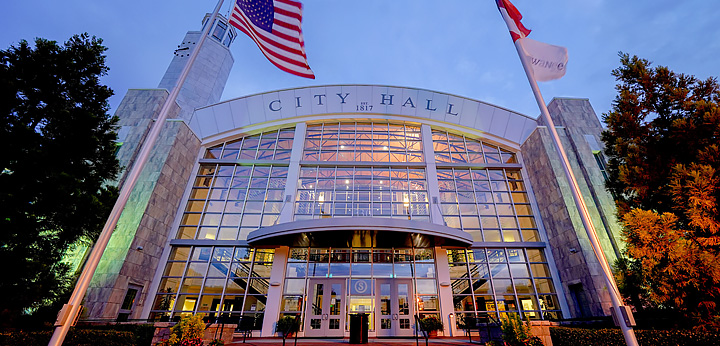
County and municipal employees. City halls, public works, parks, planning, county clerks, county attorneys, building inspectors, sanitation, and transit authorities all qualify. Inside any qualifying jurisdiction, every full-time W-2 employee is potentially PSLF-eligible regardless of role.
First responders. Police officers, sheriff’s deputies, firefighters, paramedics, EMTs, 911 dispatchers, and corrections officers qualify when employed full-time by a federal, state, county, municipal, or tribal employer. Municipal EMS divisions and 501(c)(3) hospital-based EMS qualify; private ambulance contractors generally do not, even when responding to the same calls. Volunteer service alone does not count; the qualifying months are tied to a primary full-time W-2.
A May 2025 MissionSquare Research Institute report found that 43 percent of public sector employees carry student loan debt, compared to 36 percent in the private sector. The PSLF Help Tool at studentaid.gov returns the Department of Education’s classification by EIN for any specific employer.
Employer verification specifics for public sector
Government employer verification breaks at three specific seams: federal-versus-federal-contractor, state agency versus state-funded private organization, and municipal DBA versus legal entity on the W-2.
The federal-versus-contractor distinction catches more public-sector borrowers than any other single failure mode. PSLF eligibility runs through the legal employer on the W-2, not the work performed. A contract attorney employed by a private firm holding a Department of Justice contract is a private-sector employee for PSLF purposes, even when the day-to-day work is identical to a career civil servant’s. Federal grant recipients are a related edge case: a 501(c)(3) research organization funded by NIH grants qualifies through its 501(c)(3) status, not through the federal grant itself.
State agency status is similarly W-2-specific. State universities qualify; private universities receiving state appropriations do not. State-chartered port and transportation authorities usually qualify as government instrumentalities, and the PSLF Help Tool resolves the classification authoritatively. State employees who switch between agencies inside the same state continue to accrue qualifying-payment credit; the EIN may change but the qualifying status does not.
Municipal employers often operate under doing-business-as names (City of [X] Department of Public Works, City of [X] Police Department), and PSLF eligibility runs through the legal entity on the W-2, not the public-facing DBA. Most municipal DBAs roll up cleanly to a qualifying legal entity. Multi-jurisdictional shared-service agreements (joint police districts, regional sanitation authorities, county-municipal public health partnerships) sometimes create EIN-attribution edge cases, and the PSLF Help Tool is the authoritative source for those determinations. The deeper PSLF mechanics that apply to every borrower are in our companion piece on how PSLF actually works in 2026.
The July 2026 PSLF rule and the Boston-led lawsuit
On October 30, 2025, the Department of Education finalized a regulation amending the PSLF qualifying-employer definition. The rule takes effect July 1, 2026 and grants the Secretary of Education authority to disqualify an employer prospectively for what the rule calls a "substantial illegal purpose."
For most government and nonprofit workers, day-to-day eligibility does not change. Federal agencies, state and local governments, public schools, public hospitals, police and fire departments, and traditional 501(c)(3) nonprofits remain qualifying employers. The Department projected fewer than ten employers per year affected. The rule applies only prospectively: qualifying payments certified before July 1, 2026 remain credited regardless of any subsequent determination. Our overview of federal student loan forgiveness in 2026 covers the broader landscape.
Three federal lawsuits filed in November 2025 are seeking to block the rule. The most prominent, National Council of Nonprofits v. McMahon, was filed in Massachusetts federal court by a coalition including the cities of Albuquerque, Boston, Chicago, San Francisco, and Santa Clara County, plus AFSCME, the American Federation of Teachers, and the National Education Association. Summary judgment briefing closed in early April 2026; no court has issued a preliminary injunction blocking the rule.
On April 14, 2026, a bicameral group of senators and representatives introduced a Congressional Review Act resolution to overturn the rule, and the National League of Cities has published a fact sheet for member cities. The Senate rejected the resolution on May 20, 2026. For current borrowers, the operational answer is the same regardless of how the litigation resolves: file the PSLF Employment Certification Form annually, and treat the certified record as the authoritative defense against any later employer-level determination.
First-responder-specific considerations
First responders hit PSLF problems that nurses, teachers, and federal civilians don’t, because their pay and schedules are built around shift work, hazard pay, and multi-employer rotations.
Shift-differential, hazard pay, and overtime in IDR recertification. Police and fire personnel often earn 20 to 40 percent of total annual income in shift differentials, holiday differentials, hazard pay, and mandatory overtime. Income-driven repayment plans calculate monthly payments off adjusted gross income, which captures all of that compensation in the prior year’s tax return. A first responder who recertifies mid-year off a pay stub showing only base pay can produce a payment amount the servicer later corrects upward, and corrected months can break PSLF eligibility for that period. Annual recertification on time, off the prior year’s tax return, is the load-bearing habit.
Multi-employer rotations. A paramedic working full-time for a municipal fire department and picking up shifts with a private ambulance contractor needs to track which W-2 hours qualify. Municipal hours count; private contractor hours do not. Combining hours across two qualifying public-service employers can meet the 30-hour federal full-time threshold (municipal fire plus county EMS would combine; municipal fire plus a private contractor would not).
Volunteer firefighters and reserve officers. Volunteer service alone does not generate qualifying-payment credit. To accrue toward the 120-payment count, a borrower needs a primary full-time W-2 at a qualifying public-service employer; the qualifying months are tied to that job.
Why Finnita
Finnita is a specialist student loan enrollment service that focuses exclusively on federal repayment and forgiveness programs. PSLF for government workers and first responders has enough sector-specific quirks (federal-versus-contractor verification, shift-differential income in IDR recertification, the July 2026 rule and litigation) that a generalist service can’t reliably get them all right. Finnita’s outcomes reflect the focus: across all customers and all programs, an average savings of $468 per month and a 98% enrollment success rate, against roughly 5% for public service workers attempting PSLF alone. The service is free to the employer. No refinancing. No credit checks. No new debt. Finnita is a Delaware Public Benefit Corporation. We currently work with hundreds of employers, including cities and counties across the nation. Government workers and first responders can see whether their federal loans qualify for forgiveness in about 60 seconds at finnita.com. If your city or county doesn’t yet offer Finnita, our case to leadership is in a companion piece: a student loan benefit for cities and counties at no taxpayer cost.
Frequently asked questions
Do all state and local government employees qualify for PSLF?
Yes. Every full-time W-2 employee at a state agency, state-funded university or community college, county or municipal government, public school district, or tribal government qualifies. State-chartered authorities and regional joint-powers agencies typically qualify as government instrumentalities. Use the PSLF Help Tool at studentaid.gov to look up any specific employer by EIN. Employees at private organizations holding state or municipal contracts do not qualify, even when the work is identical to a government employee’s.
Do volunteer first responders qualify for PSLF?
No. Volunteer service alone does not accrue PSLF credit; the qualifying months are tied to a primary full-time qualifying W-2 employer. Volunteer firefighters or reserve officers without that primary qualifying W-2 cannot count the volunteer hours toward the 120-payment count. A borrower with two paid qualifying public-service W-2s can combine the hours to meet the 30-hour federal full-time threshold, which is how some part-time first responders qualify.
What does the Boston-led lawsuit mean for my PSLF eligibility right now?
Right now, the rule has not yet taken effect and no specific employer has been disqualified. Even after July 1, 2026, the rule applies forward only — months you’ve already had certified are protected by the certification record itself. If your employer is a government or nonprofit at any of the lawsuit-coalition jurisdictions, the operational answer is no different than anywhere else: file the PSLF Employment Certification Form annually and keep the accepted form.
How does shift-differential, hazard pay, or overtime affect IDR payments?
IDR payments are calculated from adjusted gross income, which includes shift differentials, hazard pay, and overtime as reported on the prior tax return. A pay stub showing only base pay produces a lower payment amount that the servicer can correct later, and the corrected months can break PSLF eligibility for that period. The fix is recertifying annually on time, off the prior year’s tax return — not off a current paycheck.
What happens to PSLF credit if a public servant moves between government and private-sector jobs?
Qualifying payments accrued at any qualifying public-service employer remain credited permanently. A borrower who moves between federal civilian, state agency, county or municipal government, or 501(c)(3) nonprofit employment continues to accrue toward the same 120-payment count without interruption, provided each employer is independently qualifying and the borrower files a PSLF Employment Certification Form at each transition. PSLF requires 120 total qualifying monthly payments, not 120 consecutive. Moving to a private-sector employer pauses accrual; returning to qualifying employment resumes it.
More from the Finnita blog


See what you could save
It takes 60 seconds to find out how much you could save on your student loans. No commitment, no credit check.
Check Your SavingsBring Finnita to your agency
A meaningful employee benefit that costs you nothing. No budget approval, no procurement, no administrative burden.
Bring Finnita to Your Agency